
Ahead of the Market: Building What Memecoin Trading Became
Vyper | Co-Founder, Product
Overview
$20M+ trading volume in private beta · 14 months from concept to acquisition · 40+ feature initiatives shipped · Acquired by pump.fun Q1, 2026.
The opportunity
Serious onchain traders were running their edge across a dozen tabs: alpha on X and Telegram, analytics in one tool, execution in another, and platforms that locked you into a single chain. Every switch cost them seconds, and in memecoin markets, seconds are the trade.
We set out to build one terminal where research, execution, and community lived together, fast enough for professionals and flexible enough for any strategy.
My role
As co-founder leading product, I owned the product end to end:
Set the roadmap and drove 40+ initiatives from concept to launch
Designed the entire platform: 15+ pages and a 200+ component design system in Figma
Led partner integrations for onchain data, social intelligence, and multi-chain execution
Ran customer support myself to stay close to power users
Created all pitch materials and product demos
What we built, and where the market went
Multichain screening. Most platforms made you pick one chain for the entire experience. Vyper let traders screen and trade across chains in a single view. Today, multichain screeners are standard for trading terminals.
Launching from the terminal. We let users launch coins directly from where they traded, instead of sending them to a separate launchpad. After the acquisition, this was built into pump.fun's Terminal product.
Social calls. Traders could call coins to other users on the platform and share them straight into Discord and Telegram, turning individual conviction into community momentum. SocialFi has since become the defining product moat in crypto.
Volume-based referral rewards. Every call and share link was tracked, and users earned fees based on the volume their calls drove. This manifested into pump.fun's callout rewards program.
Results
$20M+ in trading volume during private beta
20 highly engaged users, pushing +$400k in volume a day
Four product bets that the broader market has since adopted as standard
The Outcome
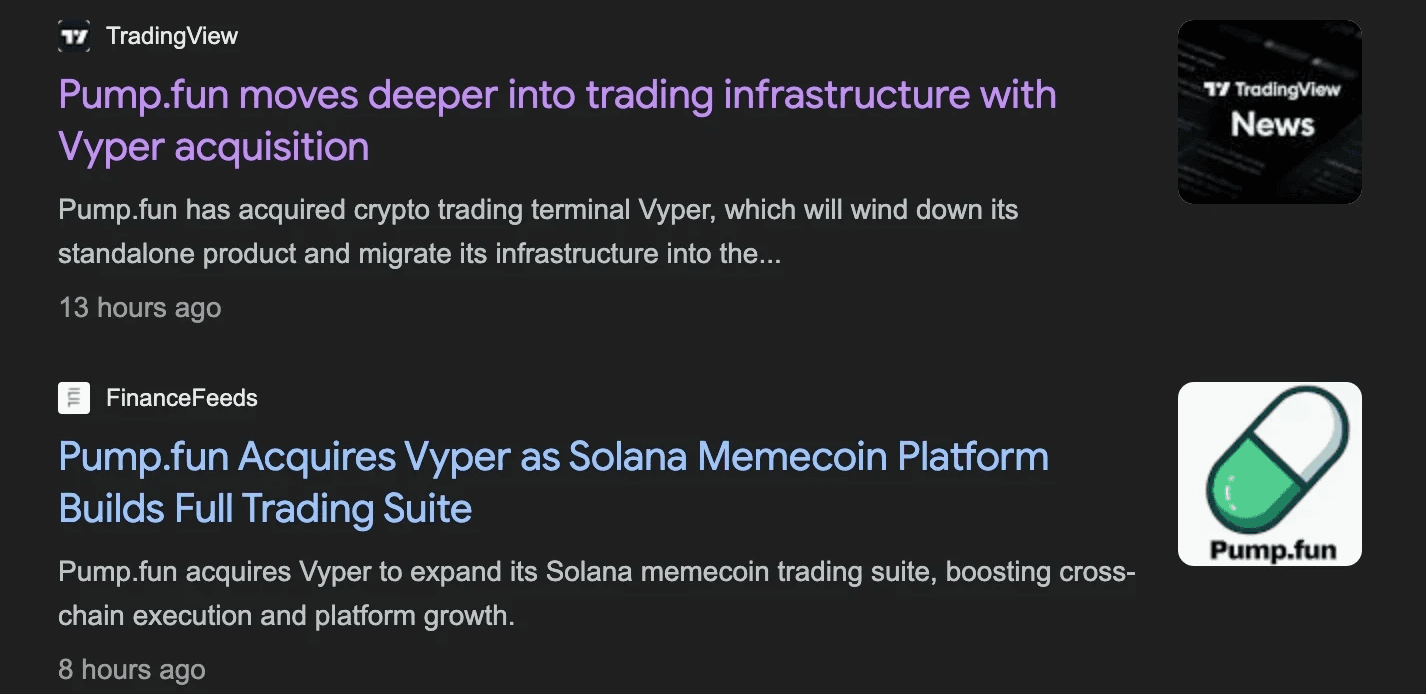
In Q1 2026, Pump.fun acquired Vyper. They weren't buying a user base; they were buying the ability to ship complex, high-quality trading products quickly. That's what we'd demonstrated, and it's what I now bring to Pump.fun, where I lead product design on the mobile app.
What I took with me
Vyper taught me the difference between building something great and building something that wins.
Being early is only half the battle. We were right about where the market was going, but competitors with simpler products and louder distribution captured the volume in the meantime.
We built the growth engine and treated it like a feature. Social calls and referral rewards were distribution mechanics. If I did it again, I'd make them the center of our go-to-market from day one, not one feature among forty.
Narrow first, then expand. I'd launch with one killer use case, half the features, far more investment in reach, and I'd build in public from the start.